How AI Turns Still Images into Short, Realistic Videos
For a long time, video creation meant starting with a camera, a script, and hours of editing. That workflow still works, but a different approach has emerged: generating video directly from a single still image. This process, broadly called image-to-video generation, is now accessible through tools that handle the heavy lifting of animation, motion prediction, and audio synchronisation.
If you have ever wanted to take a photograph and bring it to life with subtle movement, realistic motion, and consistent style across frames, the current generation of AI tools can do that. The technology has matured enough that the output feels less like a slideshow and more like a short film segment. This article explains how the process works, what to expect from the results, and where the trade-offs lie.
What image-to-video generation actually does
At its simplest, the process takes a single image as input and produces a short video clip, usually a few seconds long. The AI analyses the image to identify objects, people, background, and depth. It then predicts how those elements would move if the scene were real. Water might ripple, hair might drift in a breeze, and a person's expression might shift slightly. The goal is to preserve the original look of the image while adding natural motion.
One of the hardest parts is temporal consistency. Each frame must match the one before it so the video does not flicker or warp. Early attempts often produced jittery results where objects would morph from frame to frame. Modern models improve on that by maintaining identity across frames, meaning a face or a tree stays recognisable throughout the clip.
The phrase "image to video" appears in discussions of this technology because it captures the core transformation. You start with a static image and end with a moving sequence. The first use of that exact phrase belongs here, in the middle of the explanation of how the process works.
How motion transfer works under the hood
Motion transfer is the technique that decides which parts of the image should move and how. The model learns from thousands of video clips what natural motion looks like. When it sees a picture of a river, it knows that water generally flows downstream and ripples when it hits rocks. When it sees a portrait, it knows that eyes blink and shoulders rise and fall with breathing.
This learning is not hard-coded. The model builds a statistical understanding of motion that applies to new images it has never seen before. That is why you can feed it a drawing, a photograph, or a digital render and still get plausible movement. The trade-off is that very unusual scenes or abstract art may produce unexpected results, because the model relies on patterns it has seen during training.
Style preservation and visual identity
A common worry with video generation is that the AI will change the look of the original image. If you have a specific colour palette, lighting, or artistic style, you want that to carry through into every frame. This is where style preservation becomes important.
Good models keep the original textures and colours stable across frames. They do not reinterpret the image each time; they animate what is already there. This is especially valuable for brands that have a consistent visual identity or for artists who want to see their work move without losing its character.
On the other hand, some models add cinematic audio to the output. The audio is generated based on the scene's mood and content. A calm landscape might get gentle ambient sounds, while a bustling street scene might get city noise. The audio is not recorded; it is synthesised to match the video. This adds another layer of realism, but the quality varies depending on the tool and the scene complexity.
What to watch for when using image-to-video tools
Not all tools produce the same quality. Here are some factors to consider when choosing or evaluating a service:
- Consistency across frames: watch for flickering, sudden colour shifts, or objects that disappear and reappear.
- Motion naturalness: does the movement look organic, or does it feel robotic and repetitive?
- Style preservation: does the output still look like your original image, or does the AI impose its own style?
- Output length: most tools produce clips between two and ten seconds. Longer videos require more processing and may introduce errors.
- Audio integration: if the tool adds sound, check whether the audio fits the scene or feels generic.
These factors help you judge whether a particular tool meets your needs. The second and final use of the exact phrase "image to video" belongs here, in the middle of this practical section, because it is the term people search for when comparing options.
Short video output and realistic animation
The most common output from these tools is a short video, usually under ten seconds. That is enough for social media posts, product demonstrations, or adding life to a still frame in a presentation. Longer videos are possible but require stitching multiple clips together or using more advanced pipelines.
Realistic animation depends on subtlety. The best results come from images that already have some depth and compositional clarity. A close-up portrait with a simple background works well. A highly cluttered scene with many small objects can confuse the model, leading to motion that looks messy or unnatural.
Image prompting is another technique used alongside image-to-video generation. Instead of starting with an image, you describe the scene in text and let the AI generate both the image and the motion. That approach gives more creative freedom but less control over the final look. Starting with an actual image gives you precise control over the visual starting point, which is often preferable for commercial or artistic work.
Where the technology stands today
The field is moving quickly. Models that looked impressive a year ago now feel dated. The current generation handles motion more smoothly, preserves detail better, and runs faster. But there are still limitations. Very long videos, complex interactions between multiple moving objects, and scenes with rapid action remain challenging.
For most everyday uses, though, the quality is already high enough to be useful. Marketers use it to turn product photos into short promotional clips. Artists use it to animate their illustrations. Filmmakers use it for storyboarding and pre-visualisation. The technology does not replace traditional video production, but it offers a fast alternative when you need motion from a single still image.
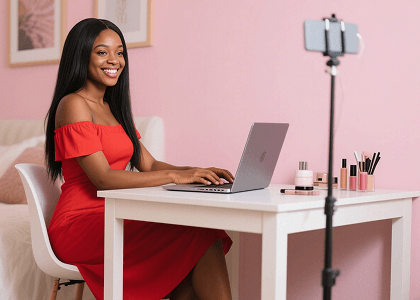
If you are considering trying an image-to-video generator, start with a simple image that has a clear subject and a clean background. Experiment with different settings to see how the model handles motion and style. The results will not always be perfect, but the gap between what the technology can do and what you might expect is shrinking every few months.
The key is to treat the output as a starting point. A generated clip can be edited, cropped, or combined with other clips. It can serve as a base layer that you refine with additional tools. Used that way, image-to-video generation becomes a practical part of a creative workflow rather than a standalone gimmick.